
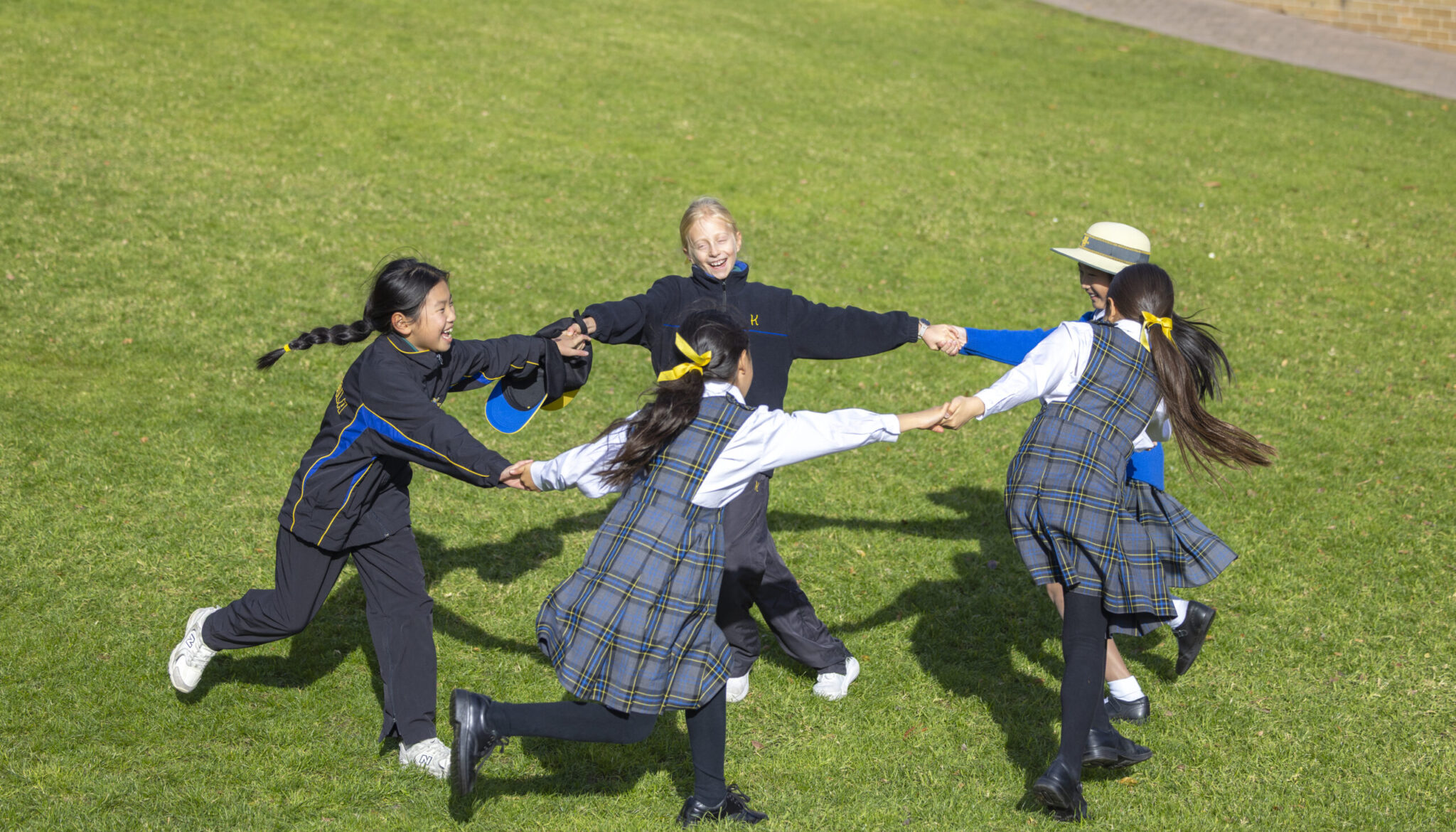
Today we proudly celebrated Foundation Day, marking 138 years of educating, empowering and inspiring generations of Kambala girls.
On Tivoli Lawn, the Kambala community came together to reflect on what it means to be part of the Kambala Sisterhood, a legacy built on our school values: humanity, courage, curiosity and respect. Our student leaders shared stories of extraordinary Old Girls who lived these values, showing us how Kambala girls, then and now, continue to shape the world around them.
From 1896 to 1960: A Glimpse into Kambala’s Past through Student Reports
1896 – Bessie Durham
At just 15, Bessie studied subjects like English History, Arithmetic, French, Drawing and Music. Her report, signed by Principals Louisa Gurney and Augustine Soubeiran noted strong academic progress, though she lost one conduct mark for untidiness!
At the time, Kambala was located in Bellevue Hill, and students didn’t wear uniforms, but instead wore ties in the school colours, French grey and primrose. Skipping was all the rage, and girls enjoyed geology excursions to Bondi and Narrabeen. The school’s first magazine had been handwritten just a year earlier, in 1895.
1925 – Vida Breckenridge
Vida was a standout student with excellent grades and conduct. Her report was signed by the Misses Roseby—Kambala’s sister Principals. The 1927 Prospectus described the school’s aim: to nurture cultured, capable women prepared to contribute meaningfully beyond school life. Girls were encouraged to attend musical concerts, educational lectures and plays, and explore art through curated image studies.
The school motto, Esto Sol Testis, was adopted in 1924, and the first reference to the grey tunic uniform appeared in this period, described as “very attractive, as well as businesslike.” Vida’s photo now hangs in Alexander Hall, where she is remembered as one of our Inspirational Old Girls.
1940 – Thea Hogg
A scholarship student, Thea consistently excelled in academics. She later studied at Sydney University, served on the Kambala Council, and wrote Hidden Gardens of Sydney. Thea’s service to the Art Gallery of NSW earned her a Medal of the Order of Australia.
During WWII, the school adapted to the times: the boarders’ sitting room was converted into a bomb shelter, and students held lunchtime concerts to raise funds for the Red Cross, while knitting socks and scarves for soldiers.
1960 – Margaret Powell
Margaret showed strong leadership from an early age, serving as Vice Captain before becoming Head Prefect in 1965. Her report praised her steady effort across a broad range of subjects—from Divinity and English to Folk Dancing and Tennis. A recent donation from her sister, Roslyn Powell, has gifted us a rare look into her school days through her original report.
1960 was a significant year:
- Alexander Hall officially opened
- Hawthorne House was added to the House System in honour of Principal Fifi Hawthorne, who retired after 33 years as Headmistress
- Kambala had 650 students
- A new summer uniform was introduced
These student reports and accompanying historical snapshots are more than just reflections of the past, they are powerful reminders that today’s students are tomorrow’s legacy.