GARC
(Global Action Research Collaborative on Girls’ Education)
This comprehensive program encompasses training, research, writing and presentations, and fellows are invited to explore intriguing research topics as part of a collegial global cohort of educators.
We see this fellowship as a wonderful opportunity for our educators to be immersed in the international girls’ school community, while developing their professional capacity in action research.
Sheridan Sweeney, Junior School Teacher, 2023 Fellow of GARC
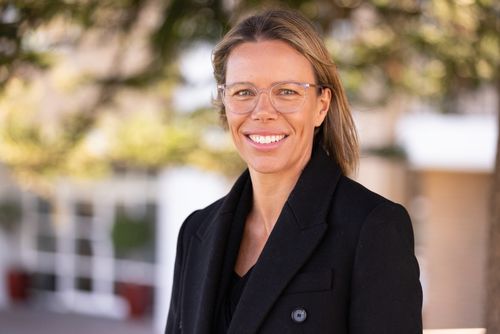
In 2023 Sheridan Sweeney completed her research project as a Fellow of the Global Action Research Collaborative (GARC). GARC is an 18-month global program that engages teachers, as academic fellows, in a rigorous action research project and culminates in the presentation of findings at the International Coalition of Girls Schools @girlsschools Conference. The opportunity was facilitated as part of Kambala’s KITE program which supports our teachers to engage with and take a leading role in the global girls school community.
Sheridan presented at the 2023 annual conference in Cleveland Ohio, and her presentation was titled, “Discovering the impact of a global competency learning program on Year 5 girls’ curiosity for global knowledge and participatory disposition towards transformative global action”.
We are proud to celebrate Sheridan’s achievement and dedication to life-long learning.
Lauren Walsh, Head of Curriculum Innovations, 2024 Fellow of GARC
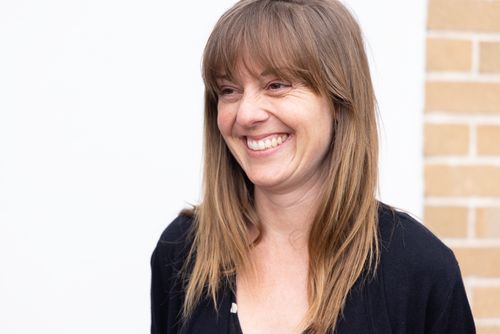
Lauren Walsh’s GARC project investigates the extent that collaborative approaches to writing builds confidence and connection in the English classroom.
Hearing from Lauren:
The joyous all-girls’ classroom is a space of dynamic learning and social collaboration. My action research investigated how the inclusion of personal perspectives within collaborative situations can alleviate feelings of disconnection and foster sisterhood among Year 12 Senior English students. Initially focused on collaborative presentist critical approaches to literature, my action research evolved to emphasise group storytelling as a powerful strategy to build interpersonal connections in the classroom.
In the final stage of my action, I actively participated as a collaborative storyteller to embody an engaged pedagogy (hooks, 1994). The findings demonstrate that regular exposure to less familiar and diverse peer groups alleviates girls’ fear of judgement in collaborative situations, the process of storytelling builds a broader sense of connection, and the engaged practitioner helps cultivate sisterhood in the classroom. Thus, by including personal narratives within collaborative learning, the classroom can manifest as a nurturing environment that enriches students’ academic and social experiences.
Ky-Lee Murphy, Director of Curriculum, 2025 Fellow of GARC
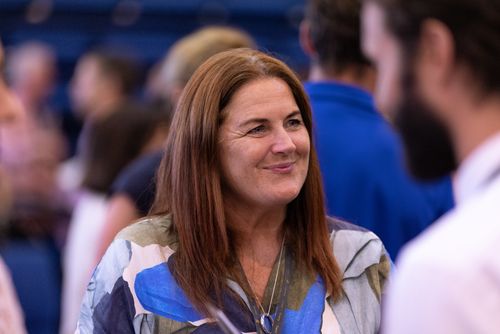
To what degree does the use of vertical whiteboards impact students’ courage, curiosity and collaboration in Mathematics?
When students make their thinking visible, they become individuals who can think, plan, create, question, and engage independently as learners.
The focus for the GARC action research for 2025 is developing student agency. The historical, traditional mathematics classroom of students sitting in rows receiving information from the teacher are long gone. The OECD has recently proven that when students are curious and persevere with their learning, they achieve higher grades.
As teachers, we want to nurture our students’ mathematical curiosity so they grow into creative, flexible problem-solvers who are resourceful, reflective, resilient, excited by new ideas and keen to explore.
My action research is based on decades of research by Peter Liljedahl (creator of Building Thinking Classrooms in Mathematics), as well as the research undertaken by Harvard University’s Project Zero team on making thinking visible. I will focus on the pedagogical strategy of students using vertical whiteboards so they can make their thinking visible, thus further stimulate curiosity and self-agency.