
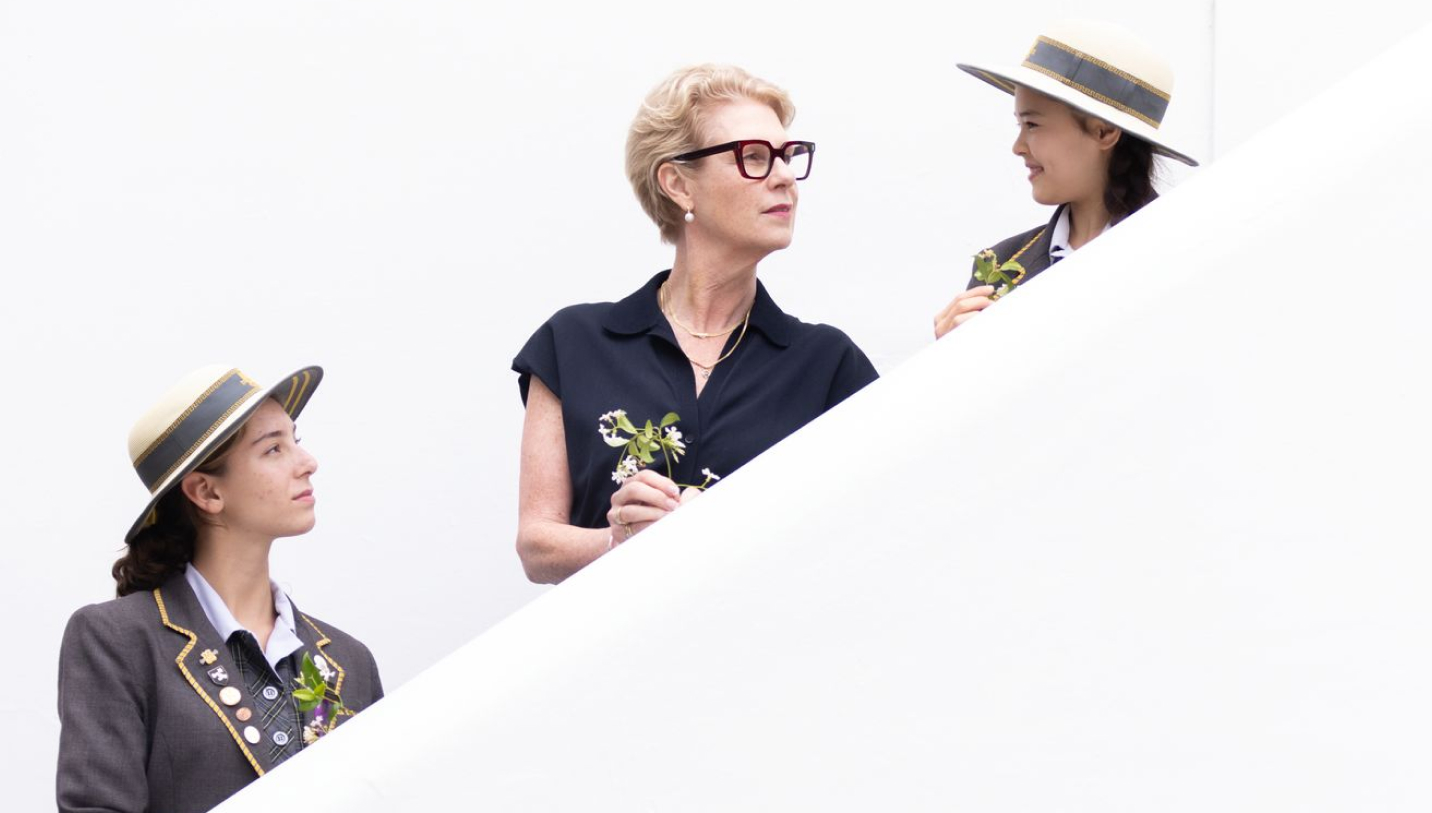
Ms Jane Danvers Principal
The question of what is worth learning has occupied educators’ minds since ancient times. According to Harvard University professor, David Perkins, what is worth learning in our society today, can be defined as ‘lifeworthy’, or that which is ‘likely to matter in the lives learners are likely to have’. Yet the lives our children are likely to lead is increasingly uncertain. If we consider the exponential changes that have taken place in the last 20 years, the future is hard to predict.
A Kambala girl commencing her learning journey in Massie House next year will graduate in 2036 and will retire sometime in the next century. She is growing up in a time of profound social and economic transformation that has been catalysed by breathtaking advances in automation and artificial intelligence, the possibility of immersive technology and the challenges of climate change. According to the World Economic Forum, by 2030 more than one billion jobs are likely to be transformed by emerging technologies like Artificial Intelligence, chatbots and cybernetics. Such innovations will revolutionise the future of work requiring different kinds of thinkers and different kinds of learners.
As our Massie house learner progresses through Kambala, her teachers aim to ignite in her love of learning that will engender the habits of mind to thrive in both her personal and professional adult life. This is no mean feat, particularly as what her future might look like is unclear. Yet there is considerable agreement in contemporary educational thinking about what ‘lifeworthy’ learning, or preparation for our students’ futures, might involve. Capabilities such as critical and creative thinking, collaboration, resilience, making links, reasoning with evidence, noticing, reflectiveness, self-evaluation, resourcefulness, empathy, and adaptability feature on most lists. Underpinning all is the key disposition to be a lifelong learner.
Lifelong learners are curious. They ask questions, always seeking to know and learn more. They try new ways to engage with complex problems and don’t give up when confronted by challenges. They are flexible and adaptive thinkers and problem solvers, transferring their knowledge and skills into new and unfamiliar situations. In essence, learning what to do when they don’t know what to do.
Kambala prides itself on instilling a love for learning in our girls. In a future of unprecedented societal shifts, education is crucial to managing the challenges ahead. Reading, writing and mathematics will always be important. Likewise, literacies such as scientific, data and emotional literacy will be vital to successful adulthood. By exposing our girls to an array of ideas and information, asking them to consider their opinions, encouraging them to consider alternative perspectives and inspiring their interest and curiosity, we nurture their appetite to learn more and never become complacent. Collectively, we play a fundamental role in shaping