
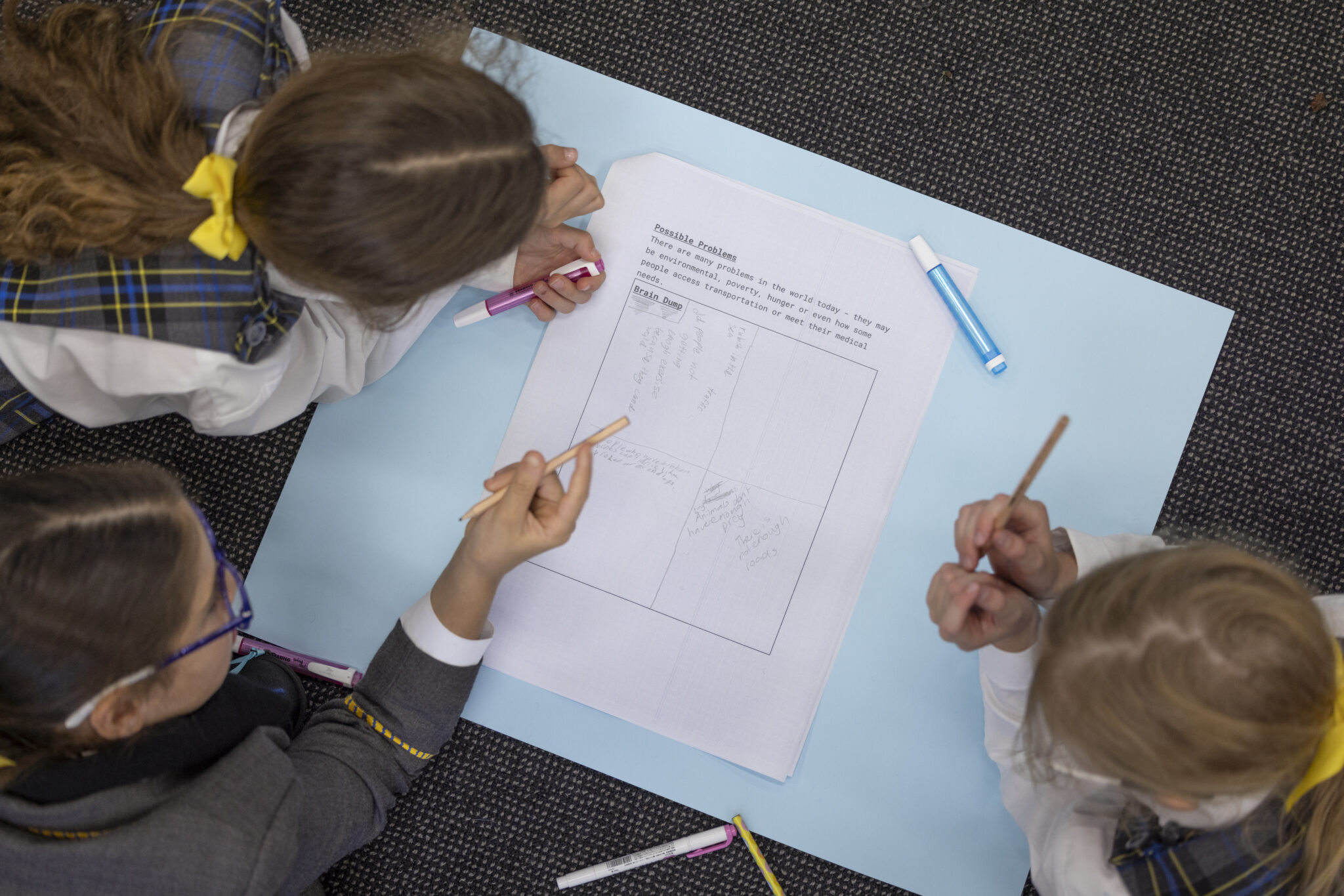
In Year 4, students embarked on an exciting journey using the Stanford d.school’s 5-stage Design Thinking model to design a robot aimed at solving a real-world problem. This project wasn’t just about building a robot; it was about learning how to think critically, empathise with others, and collaborate effectively. The first and most crucial stage, Empathise, taught the students how to truly understand the needs of others by putting themselves in others’ shoes by utilising the Harvard Project Zero thinking routine – Step Inside . This stage was essential in helping the girls grasp the real-world implications of their designs and provided the foundation for a meaningful design.
The Design Thinking process was a perfect opportunity for our students to develop not just problem-solving skills, but also a growth mindset. As they faced challenges in designing their robot, they learned that learning is not about getting the perfect answer or being flawless. It’s about embracing curiosity, pushing through challenges, and constantly improving. Whether it was in brainstorming ideas or refining their designs, the students saw firsthand how important it is to embrace the learning process, even when things didn’t go as planned.
This project also launched the students’ study of The Wild Robot, a novel about a robot named Roz who learns to navigate the wilderness and solve problems. The connection between their robot designs and Roz’s journey sparked deep discussions about empathy, technology, and problem-solving.
Through this project, our Year 4 students not only learned about collaboration and creativity but also discovered how Design Thinking can help solve real-world problems and make a positive impact.
Ms Helen Maynard
Year 4 Teacher