
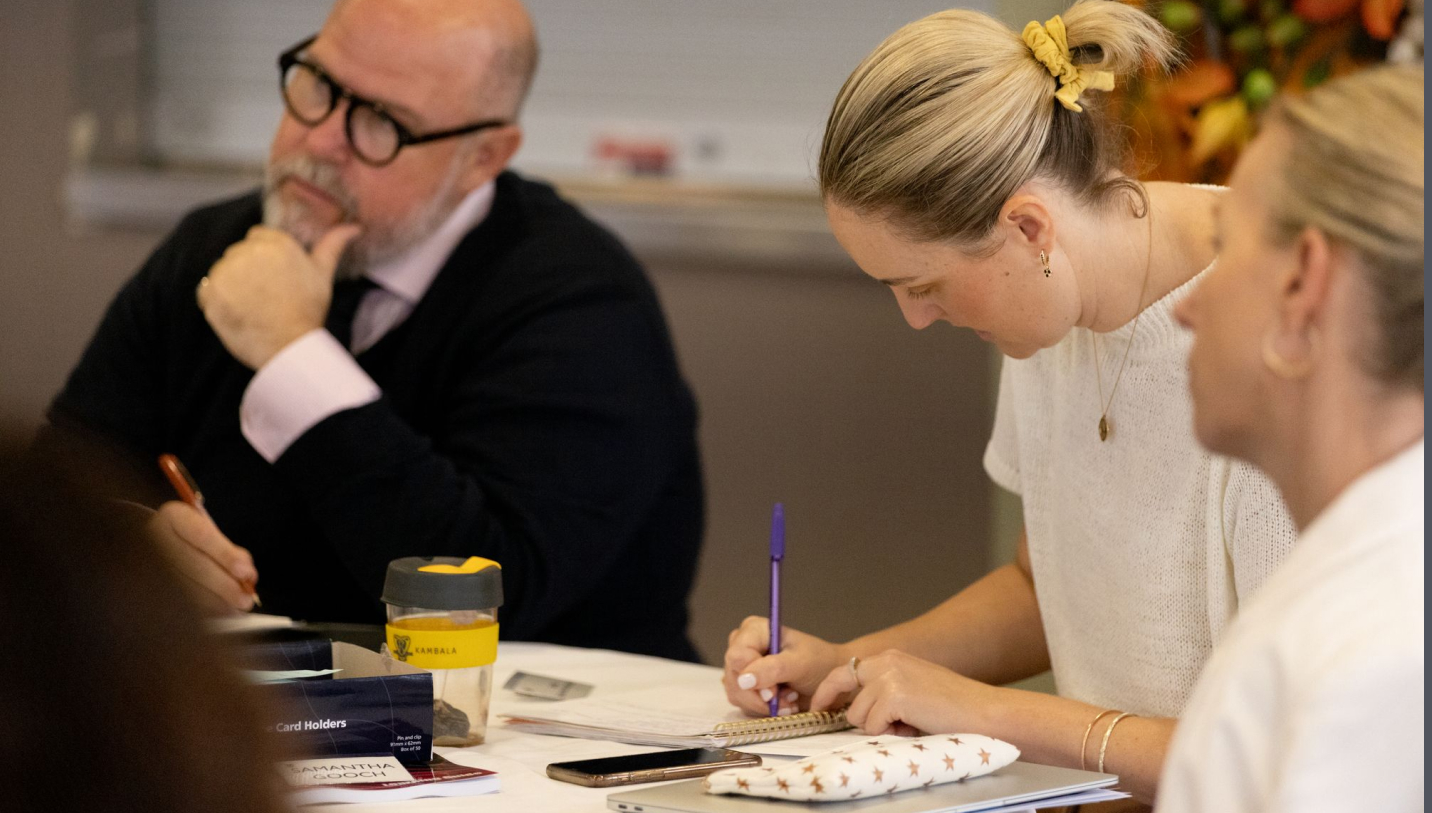
KITE is honoured to host Professor Ron Ritchhart as Kambala’s inaugural ‘Academic in Residence’. Professor Ritchhart has been a Senior Research Associate at Project Zero, Harvard Graduate School of Education since 1994. His teachings focus on how to develop, nurture and sustain thoughtful learning environments for both students and teachers.
The research of Professor Ritchhart is based on the premise that when teachers belong to a culture of thinking, they are more likely to engage in rich conversations about learning, including the discussion of problems, strategies and solutions (Ritchhart, 2023). His most recent writing illustrates an ideal paradigm of professional learning for teachers, which he refers to as “transformational learning” (Ritchhart, 2023). This approach is a significant shift from more traditional and didactic forms of professional learning, where teachers might receive information about new practices or tools from an information session or workshop. Instead, Professor Ritchhart advocates for opportunities that call on teachers to “question the assumptions that undergrid our practice through participation in constructive discourse with our colleagues” (Ritchhart, 2023, p. 4).
What does this look like at Kambala? Through his residency, Professor Ritchhart encourages us to keep our sights firmly set on the ways we can embed new practices, namely, through the critical reflection on our actions in the classroom and on our own assumptions about how our students learn. More broadly, as staff we have considered the deep philosophical question surrounding the purpose of school, and what is it that we hope our students will be like as adults after their time at Kambala.
This has seen Professor Ritchhart facilitate a variety of different sessions with our Kambala teachers. An impactful strategy we have been utilizing is called Learning Labs. In a Learning Lab, a small group of teachers come together to collaboratively plan a lesson, observe its delivery and following that, reflect on their noticings, linking what they observed to how they might approach a similar lesson with their students or their practice in general. Through all observations, the focus centres on the students and their thinking, and how a teacher might plan learning to ensure student thinking remains at the heart of learning design.
Our Academic in Residence program complements our existing commitment to Project Zero philosophies, including our annual scholarship for teachers to travel to Project Zero Classroom. Both opportunities have led to a shared understanding of theory, research and language, spanning from our Early Learning Centre to our Senior School. With a shared commitment to cultivating a School-wide culture of thinking, we are able to focus our collective efforts on the creation of learning environments that allow our teachers to focus on how we develop our student as thinkers.